
















Wagyu beef has earned its reputation as one of the most luxurious proteins in the world. The allure lies in its unique texture, striking marbling, and rich, buttery flavor that sets it apart from conventional beef. Unlike Angus, which is widely known for its robust and hearty profile, Wagyu offers an experience that borders on indulgence, attracting chefs, butchers, and consumers who prize differentiation in the culinary landscape.
Part of the fascination with Wagyu stems from its rarity. Breeding practices in Japan were historically isolated, which allowed cattle genetics to develop with a singular focus on intramuscular fat distribution and consistency. This distinct lineage, when compared with Angus, reveals an intentional prioritization of tenderness over volume. It is this purposeful cultivation that laid the foundation for the Wagyu legend.
International markets have amplified the mystique of Wagyu by emphasizing its exclusivity and elevating its cultural narrative. From high-end steakhouses in New York to Michelin-starred restaurants in Tokyo, Wagyu is presented as an experience rather than just a meal. This positioning highlights how the characteristics of Wagyu are not accidental but the result of centuries of agricultural precision.
Oleic Acid: The Silent Differentiator
At the heart of Wagyu’s distinction is its unusually high concentration of oleic acid, a monounsaturated fatty acid also found in olive oil. Scientific studies have linked oleic acid with potential health benefits such as improved cardiovascular profiles and reduced inflammation. While all beef contains fat, Wagyu’s fat is of a fundamentally different composition, giving it both culinary and nutritional advantages.
Oleic acid plays a direct role in creating the “melt-in-your-mouth” sensation that Wagyu is famous for. Unlike the saturated fats that dominate in Angus, Wagyu’s fat has a lower melting point, which causes it to soften and release flavor more readily during cooking. This not only enhances tenderness but also ensures that flavor saturates every bite in a way Angus cannot replicate.
Beyond taste and mouthfeel, oleic acid has economic significance. As consumers become more health-conscious, they increasingly value beef that provides indulgence without compromising perceived wellness. Wagyu sits in a rare position, marrying pleasure and nutritional appeal, a combination that underscores its enduring value in global markets.
Fine Muscle Fibers and Their Role in Texture
Another key distinction lies in the muscle structure of Wagyu cattle. Wagyu’s muscle fibers are exceptionally fine compared with Angus, creating a tenderness that requires less chewing and delivers a more consistent bite. This structural difference cannot be overstated, as it shapes both the sensory experience and the cooking versatility of the beef.
Fine muscle fibers allow Wagyu beef to retain moisture even under high-heat cooking conditions. Angus, while flavorful, is more prone to coarser textures that can result in a heavier chew. The delicacy of Wagyu’s muscle fibers harmonizes with its fat composition, ensuring that marbling is evenly distributed and integrates seamlessly with the protein.
For chefs, this translates into unparalleled flexibility. Wagyu can be prepared at a range of doneness levels while still delivering a tender, buttery result. Angus tends to shine at medium-rare, where its texture and juiciness peak, but Wagyu maintains its character across the spectrum, demonstrating the advantage of muscle refinement.
Comparing Wagyu and Angus in Industry Terms
The beef industry often contrasts Wagyu with Angus due to their prominence in premium markets. Angus is praised for its consistency, accessibility, and relatively balanced marbling. Wagyu, on the other hand, represents the apex of refinement, with qualities that make it both less common and more sought after. The technical differences between them drive not only consumer perception but also pricing structures across the supply chain.
Industry experts emphasize that Angus excels at scale, while Wagyu thrives on exclusivity. Angus has become the backbone of the American beef industry because it adapts well to a range of climates and produces high yields. Wagyu requires more specialized care, stricter breeding protocols, and longer feeding cycles, all of which contribute to its scarcity and cost.
For readers seeking a deeper industry analysis, there is a helpful comparison published by Destination Wagyu, a premium e-commerce brand specializing in Wagyu beef. Their resource examines the technical distinctions between the breeds, including fat quality and marbling distribution, offering an expert perspective for those evaluating beef on a professional level. Broader market perspectives on Wagyu and Angus reinforce how each continues to hold distinct but complementary places in consumer demand.
The Science of Flavor Development
Flavor is perhaps the most immediate way consumers recognize Wagyu’s superiority. High oleic acid content, paired with delicate muscle fibers, creates a unique balance of umami, richness, and subtle sweetness. These elements are not found in the same intensity in Angus, which leans toward a more savory and beef-forward profile.
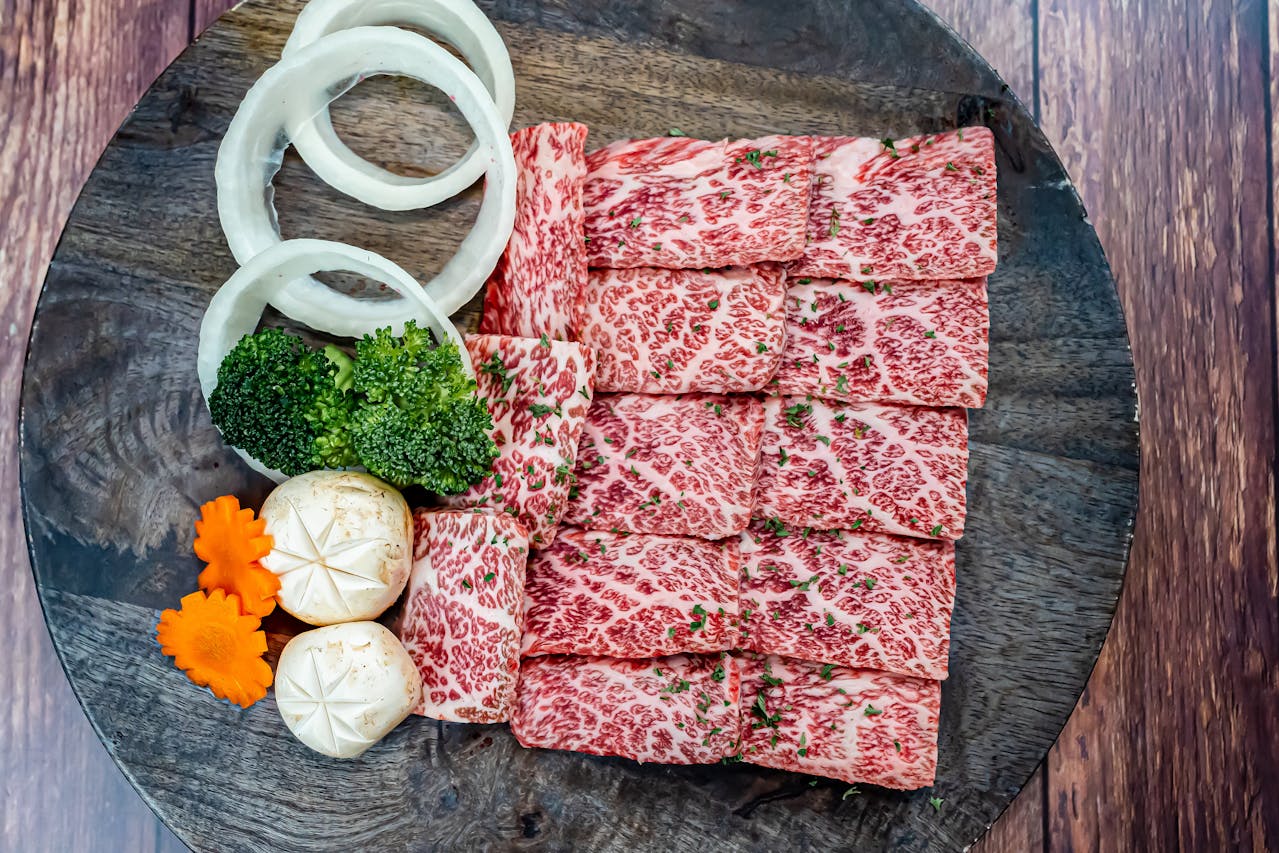
The marbling in Wagyu is distributed in micro-thin layers throughout the muscle. As the beef cooks, these layers liquefy and baste the meat from within. This process produces a flavor depth that lingers on the palate long after the meal. Angus, while satisfying, does not achieve the same complex layering of taste due to its coarser marbling.
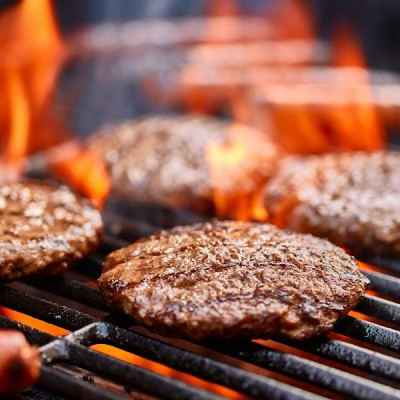
Additionally, Wagyu’s fat carries volatile compounds that interact with heat differently than those in Angus. This chemical interplay produces aromas that are as much a part of the experience as taste itself. For diners, the fragrance of Wagyu searing on a grill is an unmistakable prelude to the indulgence ahead.
Economic and Cultural Value
The premium associated with Wagyu reflects not only its intrinsic qualities but also the cultural capital it carries. In Japan, Wagyu is intertwined with heritage, rituals, and status. This heritage has been exported globally, where it continues to symbolize refinement and exclusivity. Angus, though respected, does not carry the same cultural weight, particularly outside the United States.
Wagyu’s scarcity drives its economic value. With longer production cycles and lower yields, supply remains constrained relative to demand. Consumers are willing to pay a premium not only for the taste but also for the narrative of rarity and craftsmanship. Angus beef, by contrast, is positioned as a high-quality yet attainable choice, accessible to a broader demographic.
This divergence illustrates how Wagyu and Angus occupy complementary spaces in the market. Wagyu fulfills the role of luxury, while Angus provides consistency and reliability. Together, they shape the landscape of premium beef, each catering to different consumer aspirations.
The Future of Beef Differentiation
Looking ahead, Wagyu’s distinct qualities are likely to grow more influential as consumer preferences evolve. Health-conscious buyers are increasingly attentive to the composition of their food, and Wagyu’s high oleic acid profile positions it well in this conversation. At the same time, global culinary trends are moving toward experiential dining, where the story of a product is as valuable as the product itself.
Innovation in crossbreeding is already creating hybrids that attempt to balance the volume advantages of Angus with the refinement of Wagyu. These efforts underscore the industry’s recognition that consumers desire both quality and availability. Still, purebred Wagyu remains unmatched in delivering the ultimate combination of tenderness, marbling, and taste.
Sustainability will also play a role in shaping the trajectory of Wagyu’s market. Producers will need to balance heritage with modern environmental considerations, ensuring that the exclusivity of Wagyu does not come at odds with global concerns. This balance may redefine how Wagyu is positioned in the years to come.