
















Plating is not only about making your food look attractive; it is about enhancing the entire dining experience. When food is beautifully presented, it appeals to more than just your taste buds. It engages your senses and sets the stage for a memorable meal.
The way a dish is plated can elevate its flavour and make each bite feel special. From vibrant colours to carefully arranged textures, the art of plating transforms an ordinary meal into a feast for the eyes. Let’s explore how you can make your meals as visually satisfying as they are delicious.
Serving Boards: The Foundation for Rustic and Charcuterie Dishes
Serving boards are more than just functional pieces. They play a key role in how food is presented and experienced. Whether you are arranging cheeses, fruits, or a charcuterie platter, serving boards help create a setting that highlights the flavours of each item and adds a touch of refinement to casual dining.
Wooden boards, with their natural grain and warmth, bring a cosy, earthy feel that suits rustic meals and charcuterie spreads. In contrast, slate boards provide a sleek and modern aesthetic, offering a sophisticated backdrop for cheeses and meats. The dark surface enhances vibrant colours and helps fresh fruits and cured meats stand out.
When choosing the right board, consider the overall style of your meal. To achieve a clean and minimalist look, choose a flat wooden board that allows the food to take centre stage. For a more dynamic presentation, use a textured board with grooves or edges to add visual depth and interest.
No matter what you are serving, serving boards allow you to arrange food in a way that is both visually appealing and appetising. They help create a dining experience that celebrates attention to detail and presentation.
The Rule of Thirds: Balancing Proportions on the Plate
The rule of thirds is a key principle in food plating that creates balance and visual harmony. Imagine dividing your plate into nine equal sections using two horizontal and two vertical lines. By placing food components along these lines or at their intersections, you can naturally guide the viewer’s eye across the dish.
To apply this rule effectively, consider where you position your main protein, starch, and vegetables. For example, you might place the protein in one third of the plate, the starch in another, and the vegetables in the remaining section. This approach not only ensures balance but also allows each element to stand out.
A variety of colours, shapes, and textures enhances visual appeal even further. Try pairing vibrant greens with golden-brown proteins and creamy starches for contrast and interest. Leaving some empty space on the plate also prevents overcrowding and gives each component room to shine.
By using the rule of thirds, you can elevate your plating skills and create dishes that please both the eye and the palate.
Colour Contrast and Layering: Making Your Meal Pop
A visually striking dish captures attention even before the first bite. Incorporating vibrant colours and thoughtful layering can lift your presentation from ordinary to extraordinary.
Bright vegetables, rich sauces, and fresh garnishes create visual excitement and convey freshness. For instance, pairing deep green spinach with bright orange carrots not only looks appealing but also suggests balance and vitality. Contrasting colours make each element stand out and enhance the dish’s overall appearance.
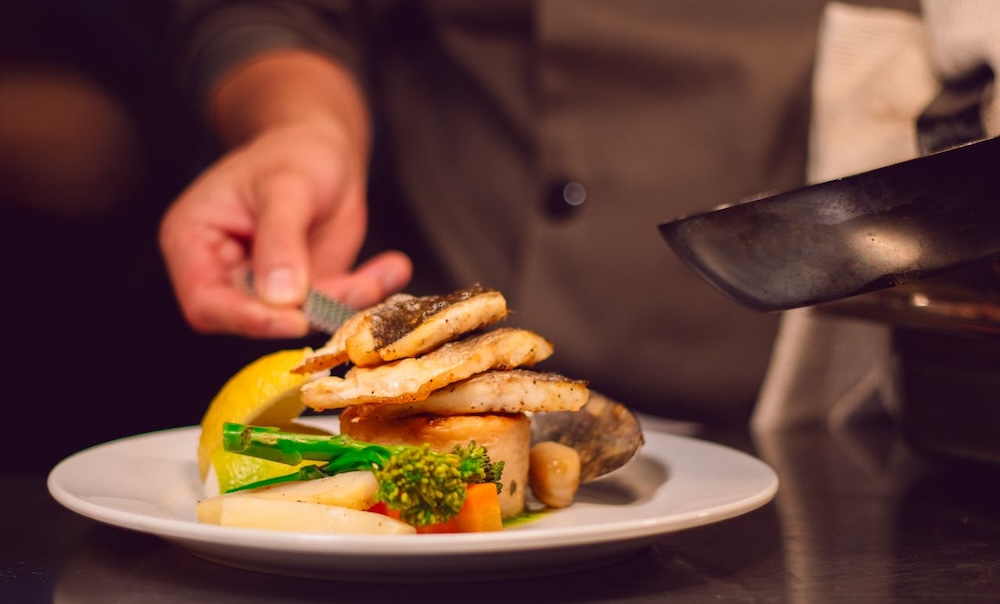
Layering adds depth to your plating. Arranging components to create height draws the diner’s eye and adds dimension to the presentation. Placing a protein on a bed of grains or vegetables looks elegant and allows for a harmonious blend of flavours in each bite.
Reflecting the season through natural colours also strengthens the authenticity of your dish. Use seasonal produce to highlight vibrant hues that match the time of year and add visual warmth.
By skillfully combining colour contrast and layering, you can transform a simple meal into a visually stunning culinary experience.
Textures: Adding Interest Through Different Components
Texture in food plating is about more than just how a dish feels. It influences how diners experience flavour and satisfaction. Combining crunchy, creamy, tender, and crispy elements adds depth and variety to a meal.
Imagine a crispy skin paired with a tender fillet or a creamy sauce that complements a crunchy garnish. This interplay keeps every bite interesting and engaging. A varied texture profile enhances both flavour and enjoyment, turning an ordinary dish into something memorable.
Incorporating different textures also prevents monotony. A plate with only one texture can feel flat and uninspired. By pairing a smooth purée with a crisp topping or a soft base with a crunchy finish, you create a balanced and appealing dish.
When plating your meals, think beyond flavour alone. Consider how textures can work together to create harmony and elevate the dining experience. The right combination of textures adds both visual appeal and sensory delight.
Plating Transforms Every Meal into an Experience
Plating is about more than visual beauty; it is about creating a complete sensory experience. By focusing on colour, texture, and thoughtful arrangement, you can make any dish as visually exciting as it is delicious.
Whether you are using serving boards to create a rustic spread or applying the rule of thirds for balance, every detail plays a part in how the meal is perceived. Take time to plate with intention and creativity. It is a simple yet powerful way to make every meal feel special, memorable, and truly enjoyable.